Every great film needs a villain. They drive the plot in their desire to prevent the success of ‘the good guys’. Some of the best villains are so beautifully evil they command not only respect, but admiration, from audiences. But every now and again, a villain will emerge that not only redefines the term, but makes us question our own morality in the process.
Stories are the fabric of our society. The tales we tell may vary in content, but they all tell the same timeless story. This can be order vs chaos, light vs dark or, of course, good vs evil; it’s the conflict between the two that forms the basis of the narrative. Basically, there can be no hero without a villain. The villain is the embodiment of evil, often causing harm to achieve their objective. Their actions lead to them often being referred to as a ‘monster’.
The concept of the ‘monster’ is fascinating and deserves much more attention than the mention I’m giving it here. I would highly recommend reading The Science of Monsters by Matt Kaplan who takes a wonderful look into the manifestation of the monster throughout our society, past and present. We’ve come a long way from demonic creatures, zombies and aliens loose in our world, killing everything in their path, to more considered, almost relatable enemies. Sometimes the real evil lies on the inside, much closer to home.
I could spend a lifetime discussing the array villains that have appeared in popular culture (and what a life it would be). However, I’ve narrowed it down to five of my favourites that encapsulate some of the greatest there has ever been.
The Puppet Master: Dark Lords
Sauron
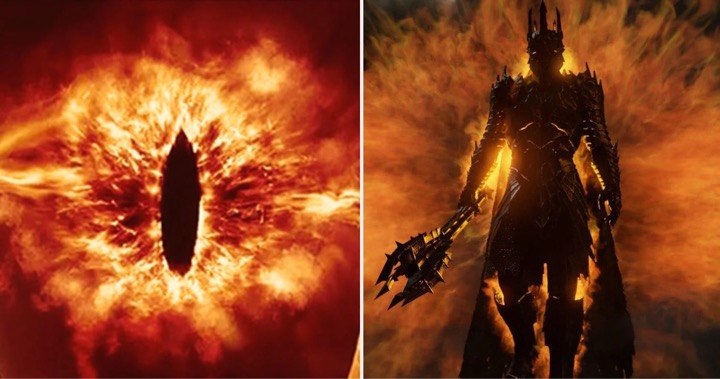
Sauron was become now a sorcerer of dreadful power, master of shadows and of phantoms, foul in wisdom, cruel in strength, misshaping what he touched, twisting what he ruled, lord of werewolves; his dominion was torment.
J.R.R Tolkien. The Silmarillion
Fans of Middle Earth will be more than familiar with Sauron. Throughout his most famous appearances in The Hobbit and The Lord of the Rings he utters a mere few lines, and is seen only a handful of times. Despite this, he is the mastermind of evil, his actions and intentions drive the fate of all. Sauron personifies darkness and manipulation, bending many to his will in his quest for the One Ring and dominion over Middle Earth. His name is mentioned in hushed tones, often simply referred to as ‘The Darkness’, inspiring fear through seemingly limitless power and his ability to influence all life. Sauron adds a nuance to the definition and complexities of what a villain can be.
Emperor Palpatine
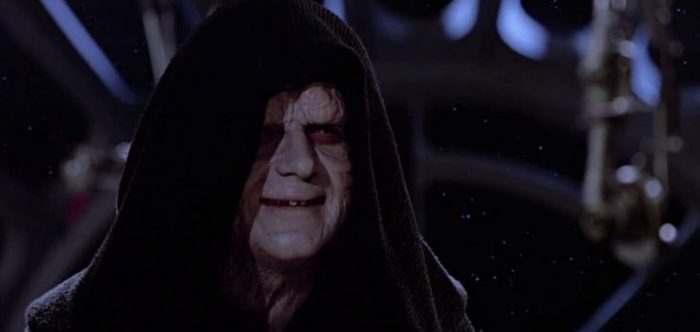
Our second Dark Lord is Palpatine, the Dark Lord of the Sith. When Star Wars: A New Hope first hit the big screen, audiences were introduced to Darth Vader as the primary antagonist; he represented the oppression of the Empire and fast became one of the most iconic villains in popular culture. However, there comes a moment in The Empire Strikes Back where Darth Vader kneels and speaks to the one he calls master.
We are first introduced to the Emperor in Return of the Jedi as what appears to be an old man, concealed by a hood, yet possessing a voice that sends a shiver down your spine. He is the master manipulator, the sentient strategist and the ultimate power in the universe. His intellect alone is enough to disable Luke Skywalker; when he does resort to a physical attack he produces a terrifying blast of lightning from his fingertips with ease. That right there, is true power.
In more recent films, we learn he was the mastermind behind the rise of the Empire, acting as both the Supreme Chancellor and Darth Sidious. He created the conflict that paved the way for his rise to power and the realisation of his vision, even defeating Yoda along the way. His lust for power was so great he even murdered his own master. The fear appears through the mystery of his identity, the limits of his power and his political manipulation. No one can challenge his place among the greatest villains of all time.
The Mirror: Who Is the Real Enemy?
The Titans
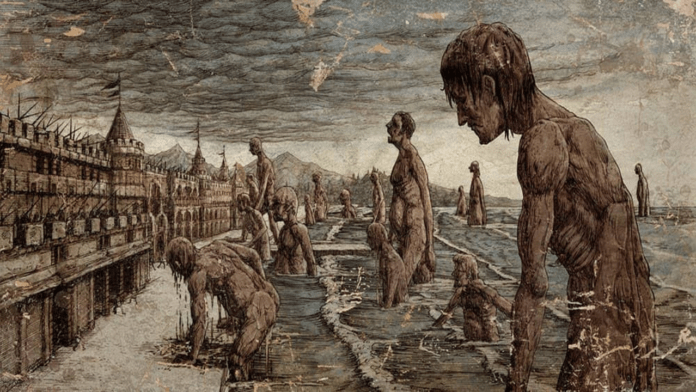
For any fan of manga or anime, Attack on Titan is a must. In saying that, for any fan of a post-apocalyptic fight for survival and a coming of age story like no other, this cannot be ignored. The story begins with the remnants of humanity living in territories surrounded by three huge walls. They live in fear of the titans, giant humanoids who seem to want nothing more than to devour the human race (literally).
Initially it seems very simple, the humans must do what they can to stop the onslaught and wipe out each and every titan. The origin of the titans is unknown; they look like larger, mutated versions of humans, but devoid of humanity. As the story develops, we learn the central government has ‘rewritten history’ and covered up what exists outside the walls, killing anyone that questions this new reality.
The humans come to learn a terrible truth. These titans are not the villains, these humans, or Eldians, are the titans. There is another race of humans across the sea, the Marleyans, who want to see the end of the Eldians. By using Eldian slaves and transforming them into their titan form, the Marleyeans are turning Eldians against each other, while the Eldian central government has its’ people convinced the titans are a supernatural enemy.
Words alone cannot truly explain the beautiful complexity of Attack on Titan. But the story reveals a truly terrifying type of villain: the mirror. The real enemy is not an external force. Sometimes the truth we seek cannot be found in the supernatural; often reality falls much closer to home. A little perspective and reflection can radically change the supposedly rigid definition of right and wrong. And in the process, it gives us a chilling reminder of how the abuse of power leads to corruption. The real enemy may just be humanity itself.
The Joker
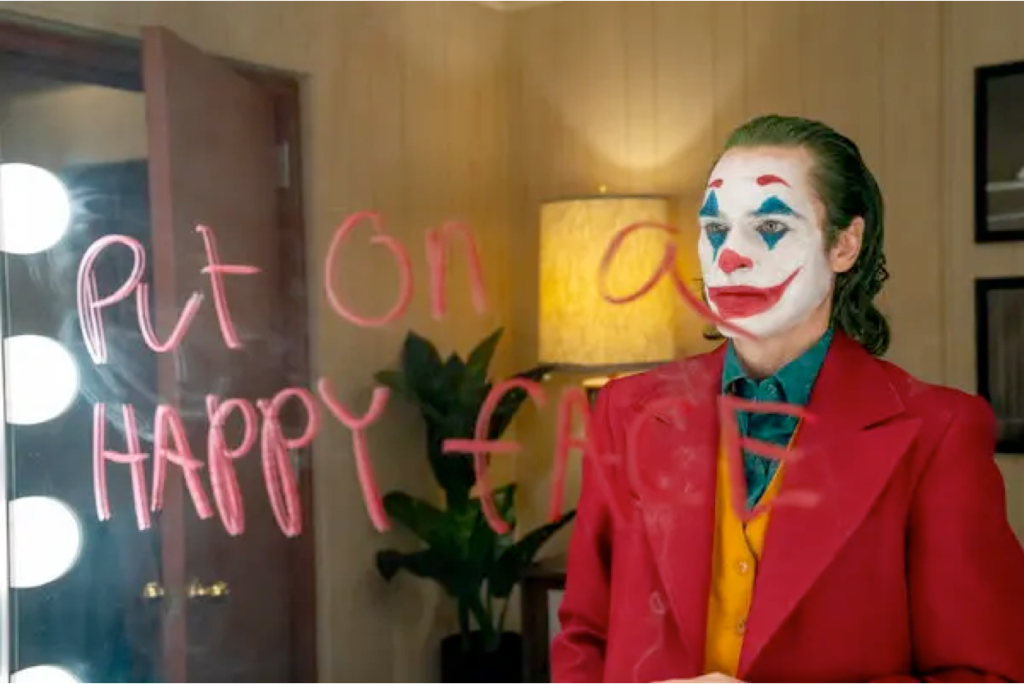
The Joker is one of the all time great supervillains, a criminal mastermind with a truly sadistic sense of humour. The 2019 film Joker gave the character the origin story we had all been waiting for.
The natural antagonist had become the protagonist. We sat and watched in horror as Arthur Fleck transformed into the Joker. Suddenly the Joker was no longer the villain, the Joker was the victim of a heartless society fighting to be accepted. Once again, we searched for the villain and found ourselves looking into a mirror. It was society that drove Arthur to become the Joker. His criminal empire was forged as a revolution against a corrupt and uncaring world.
What do you get when you cross a mentally ill loner with a society that abandons him and treats him like trash? I’ll tell you what you get, you get what you f***ing deserve!
Arthur Fleck. Joker.
Just like that, you start to understand where the Joker is coming from. He lived in a world where a corrupt power structure leads to the oppression of the powerless. He became the icon of the powerless, fighting back against their oppressors. And in that moment, the long time villain became our hero. The origin of the Joker forces us to question not only our own morality but also that of society as well.
Once more, looking at events from another perspective can drastically change our judgement. The concept of right and wrong become relative and force us to ask an uncomfortable question: who is the real enemy?
Thanos: The Mad Titan

The Marvel Cinematic Universe is, in my humble opinion, the greatest film series that has ever existed. The 22 films that span the Infinity saga, starting with Iron Man through to Endgame, are tied together through one single character. This character forges the puppet master with the mirror to form the ultimate supervillain.
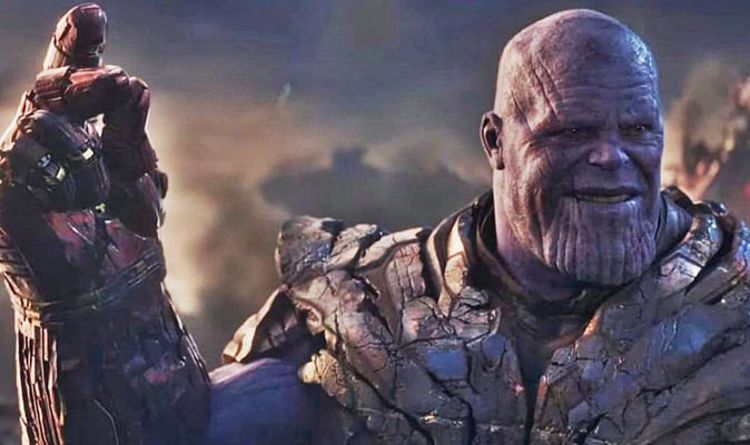
Throughout the 22 films, Thanos only appears in 3, with minor appearances in 2 more, and yet his quest to collect the Infinity Stones drives the plot forward. His mere influence creates a tension, a mystery and a fear that is felt by the heroes yet never fully explained. When he emerges from the darkness, he reveals a seemingly limitless power and impressive intellectual capabilities. His arrival in Infinity War brings with it connotations of fate and the manifestation of inevitability.
I know what it’s like to lose. To feel so desperately that you’re right, yet to fail nonetheless. It’s frightening, turns the legs to jelly. I ask you to what end? Dread it. Run from it. Destiny arrives all the same. And now it’s here. Or should I say, I am.
Thanos. Infinity War
Thanos wants to collect the six stones in the Infinity Gauntlet and perform the snap, which will wipe out half of all life in the universe. Learning this truth comes across like the dreams of a genocidal maniac. Having established Thanos as a presence in the universe, the final two films provide his backstory. Much like the Joker, we come to learn the detail of his plans.
It was beautiful. Titan was like most planets. Too many mouths and not enough food to go around. And when we faced extinction I offered a solution. Genocide, at random. Dispassionate. Fair to rich and poor alike. They called me a madman, but what I predicted came to pass. With all six stones I could simply snap my fingers and it would all cease to exist. I call that mercy. Then I finally rest and watch the sun rise on a grateful universe. The hardest choices require the strongest will
Thanos. Infinity War
His home planet was destroyed by overpopulation and the draining of resources. Without a radical solution, Thanos’ prediction came true. From that moment, he vowed to right the wrongs he saw in the universe. By wiping out half the population, it would give the universe a chance at peace.
You were going to bed hungry, scrounging for scraps. Your planet was on the brink of collapse. I’m the one who stopped that. You know what’s happened since then? The children born have known nothing but full bellies and clear skies. It’s a paradise. Perfectly balanced, as all things should be
Thanos, Infinity War
Thanos is convinced his actions are justified; to him they are not coming from a place of evil. To him he is acting for the good of the universe. His methods have brought peace and prosperity to planets that once suffered in poverty. In his opinion, he was the only one with the strength and determination to make such a difficult choice.
This is why Thanos takes his place as my ultimate supervillain. His philosophy is rooted in a desire to do good, yet his actions make him responsible for the murder of trillions. His limitless power from the darkness makes him feared, yet you have to admit, his arguments attract some level of respect. Once again, Thanos’ ideology reflects our own fears; we are living on a planet of limited resources and an ever growing population. How much longer can we sustain life until more drastic measures must be taken? Why are we fighting against an inevitability? Thanos represents the radical last resort to overpopulation, but who brought this about in the first place? And so I ask again, who is the real enemy?
The Villain: Evolution in Action?
A villain forces us to question our own humanity, challenging us to face the changing fears in our society over time. Their methods may be extreme but their message is often hauntingly relatable. A well-crafted villain can force us to question morality; there is a much greater complexity to life than just right vs wrong, good vs bad, or light vs dark. To understand our society, we must understand that perspective changes the narrative.
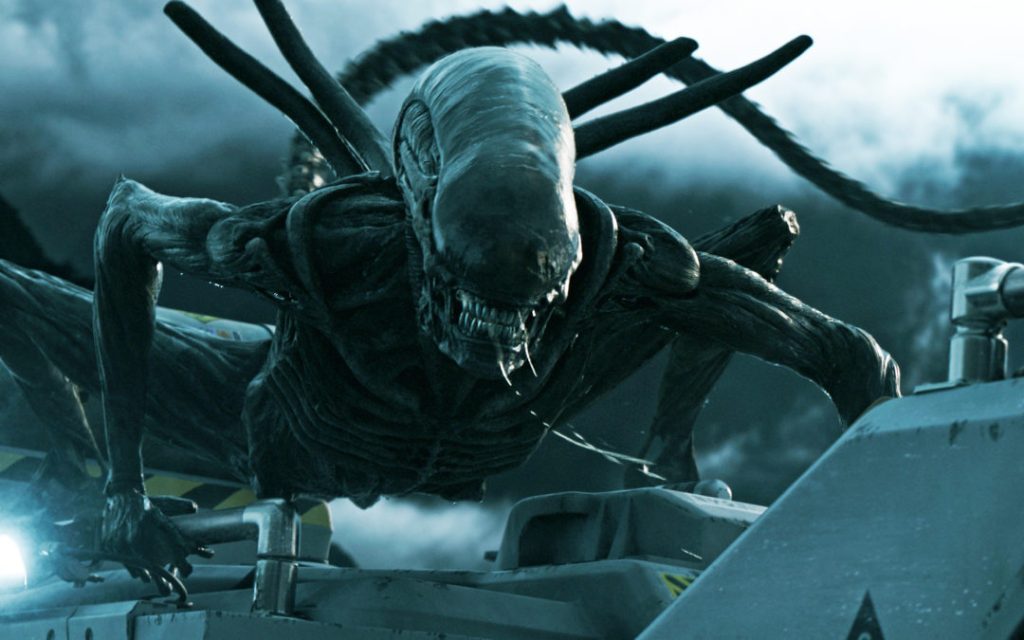
Our definition of monster revolves around fear, cruelty and inhumanity. In popular culture, monsters have taken many forms. When humans looked towards space, aliens became the icon of terror. The mystery surrounding what happens after death led to rise of the zombie. Religious beliefs have given us the deadly sins and the devil himself. We exist in the light and naturally fear the darkness. Darkness means uncertainty. And we fear what we do not understand.
Monster is a relative term. To a canary, a cat is a monster. We’re just used to being the cat.
Henry Wu. Jurassic World.
But what if the monster looked a little more, familiar? Sometimes what scares us most is the monster we see in ourselves. The best villains are those that hold a mirror up to our own world; an insatiable lust for power and profit, manipulation for personal gain, and the destruction of our world through our unrelenting expansion. They remind us dark thoughts are nothing more than what it is to be human.
When we begin to understand the other side of the story, we realise humanity is the cause of many of the evils of our world. What happens when we lose our control? What happens when the consequences of our actions come back to haunt us? Is it time to face the reality that we may be our own worst enemy?
Villains cannot be bound to a fixed description. In the years to come there will be new evils to dominate our destiny, forming fresh enemies in the stories we tell. They exist to remind us of our flaws, and in the end, make us better people. So what I’m saying, if I’m saying anything, is we have some truly exciting and terrifying villains still to come. And I can’t wait.
 The Osiris Diaries