
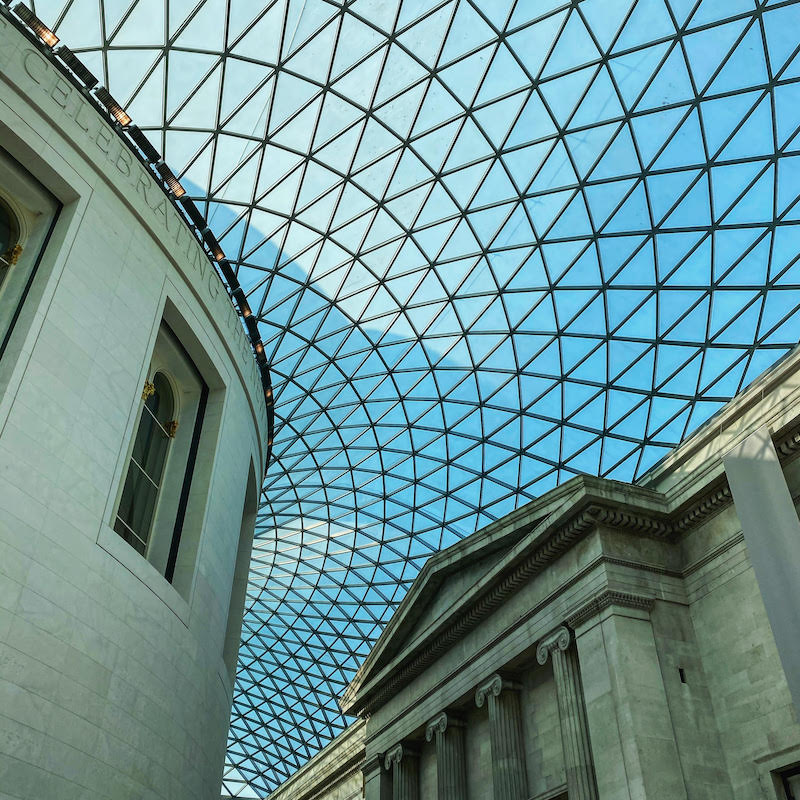
Living in the midst of a global pandemic, the human experience has transformed before our very eyes. Our cultural landscape has been forced to adapt in order to survive. As the United Kingdom searches for a route back to normality, the doors of the British Museum have opened once again. Once inside however, things feel anything but normal. Yet in these unprecedented times, is this necessarily a bad thing?
Twelve months ago, no one would have predicted that visiting a museum in 2020 would be considered such an achievement. Since the onset of coronavirus restrictions in March, the museum sector has been starved of its most vital lifeline; visitors. As the British government announced an easing of lockdown, our cultural spaces could begin to welcome us back. But in this strange new world, what would happen to the museum experience?
For the first time, tickets for the British Museum have to be booked in advance, with visitors choosing a time slot for entry. The ability to pop in on a whim over a lunch hour is now nothing more than a fond memory. Straight away however there’s an obvious advantage at play; the lack of crowds. For the museum industry, the lower attendance figures are a real danger to survival, but for the visitor experience it is nothing short of a blessing in disguise. How many times have you gone to a major museum but been unable to get anywhere close to your favourite objects? How many times has your shot of the Rosetta Stone been photobombed by an over excited family? How many times have you learnt more about popular brands of rucksacks than the funerary beliefs of ancient people? Like the objects in the galleries themselves, all that is now a thing of the past.
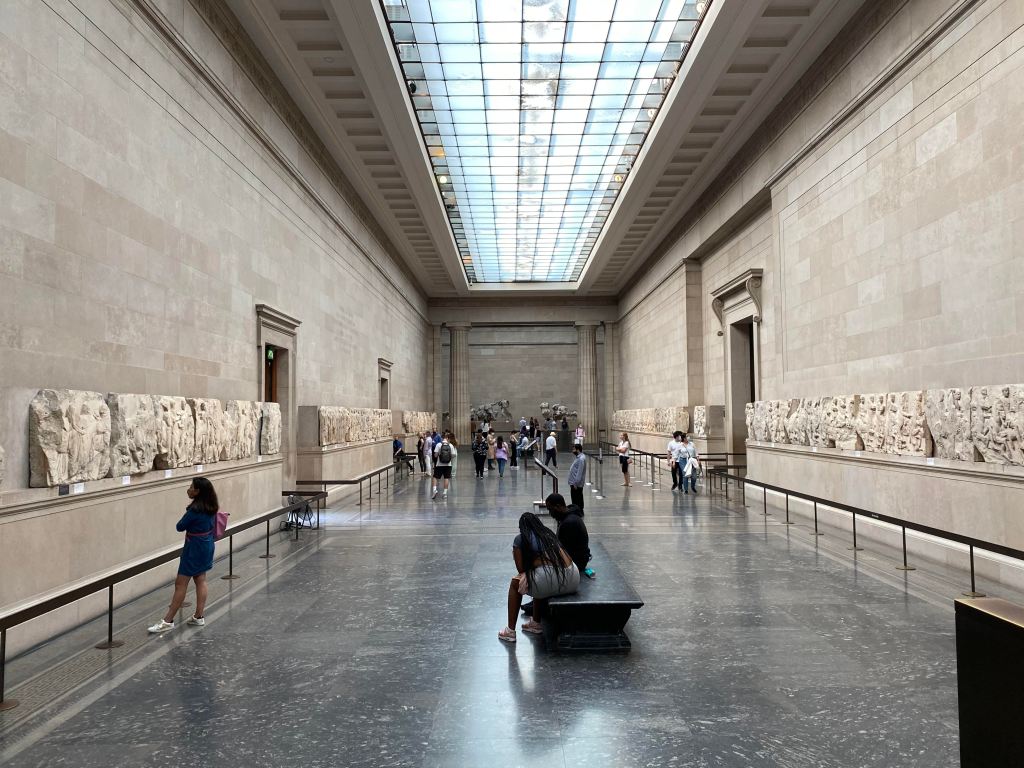
Despite the colossal size of the British Museum, you are often gripped not by a sense of history but one of claustrophobia as you navigate the exhibition spaces. During this new era however, you emerge into a new feeling of freedom and opportunity. The necessity of social distancing inadvertently promotes a policy of fair viewing around the most popular exhibits. The clever combination of lower visitor numbers with social distancing creates a stress-free environment where an object can finally be studied, not swiftly scanned while an impatient tour group lurks behind.
They say variety is the spice of the life, but that can be a curse when you only have a couple of hours to see one of the largest and most diverse museum collections in the world. A trip to the British Museum is therefore either a planned assault on selected galleries or an open-mouthed wander around collections and cultures from all around the world. Whatever your chosen approach, unless of course you have set aside an entire day, there is an inescapable certainty that you will not be seeing everything on offer. But imagine for a moment your freedom was taken away, replaced by a journey curated by the museum itself?
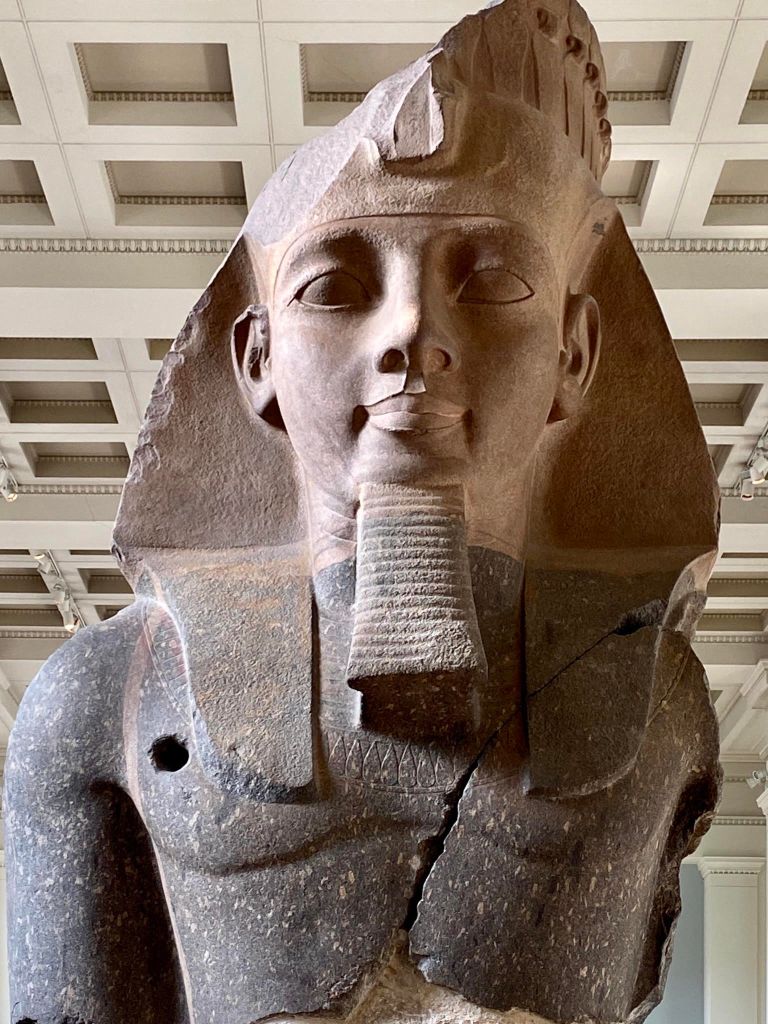
At first, any talk of an imposed restriction on your freedom would be met with instant negativity. But you know what they say, the journey can be just as important as the destination. Tolkien would certainly agree, anyway. While it is certainly obvious that the new route is driven by logistics over visitor experience, it does create a curious new interaction with familiar objects and galleries, culminating in a feeling of re-discovery. The museum is giving you what could almost be described as the ‘greatest hits’ tour; you are led through the monumental achievements of the Egyptians, through beautiful Greek sculpture, stopping to marvel at the wonder of the South American past before travelling back to our Imperialist in the Enlightenment Gallery.
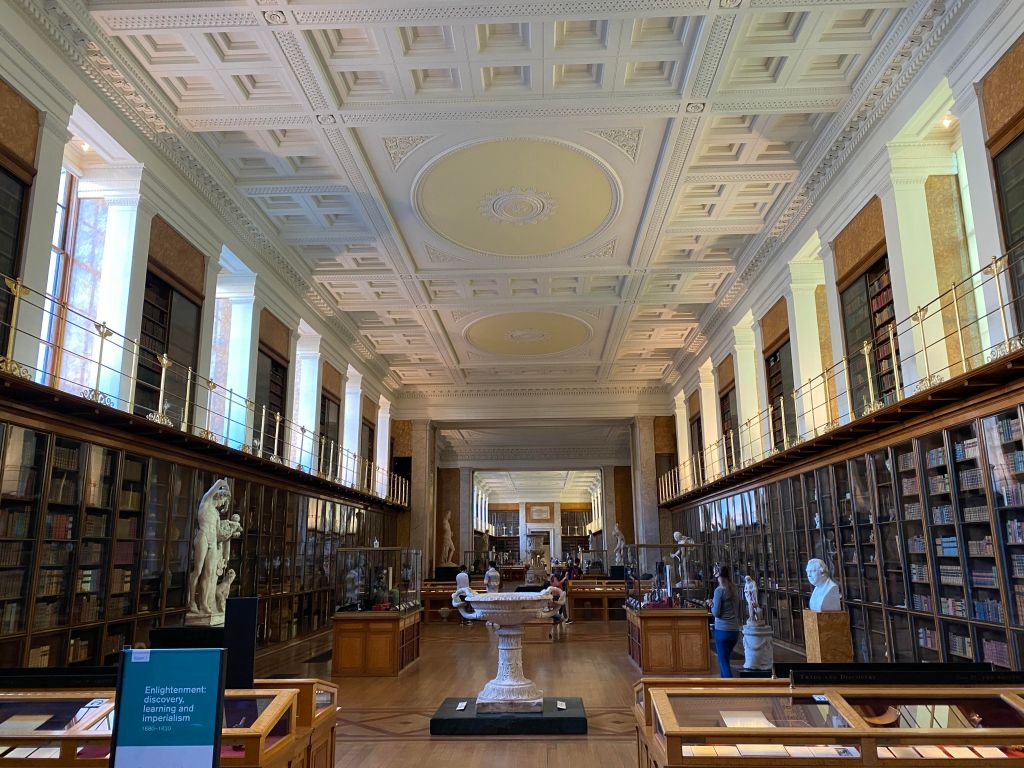
The more cynical visitor may suggest the British Museum is using the opportunity to boast about it’s impressive, and often controversial, collections. Both the Rosetta Stone and the Parthenon Marbles have a troubled past in their acquisition, yet the museum has pushed these exhibits further into the spotlight. However, it can be argued the museum has done an impressive job of creating a new scaled down event that still inspires conversation. In many ways, this political conversation has become an integral part of the experience, for better or for worse.
It is certainly frustrating that only the ground floor galleries have been opened. The upper exhibitions provide greater depth to the icons of the ground floor, alas the restricted space prevents the possibility of safe viewing and integration into the one-way system. One possible solution could be looking towards bookable slots to a selection of the upper galleries for a more limited audience. After all, for some the museum is more than just something to do; it is a wealth of knowledge that could lead towards new exciting discoveries about our past.
The normality we once knew may well be gone forever, but this doesn’t have to be a time for despair. The success of the human race has been our adaption and evolution (biologically, technologically and culturally) to the world around us, especially in times of adverse change. Our establishment cannot cope with the coronavirus, for it exists to serve a world that no longer exists. The only solution is evolution. As such, this is a time to embrace what many are calling the ‘new normal’. Change is an exciting prospect, inviting innovators to develop new ways of engaging with the material culture of our shared human experience.
As a superpower on the global stage, the British Museum should use this opportunity to spearhead real change as we look towards a new era. The museum has opened its doors once again, making the best of our current situation. And given the circumstances, the experience is certainly impressive. But museums need to do more than just cope, they needs to thrive. The very soul of humanity burns within our cultural expression, and we cannot let that spark go out. Now is not the time for negativity; now is the time to embrace our new future, and with it, save our past.
 The Osiris Diaries